

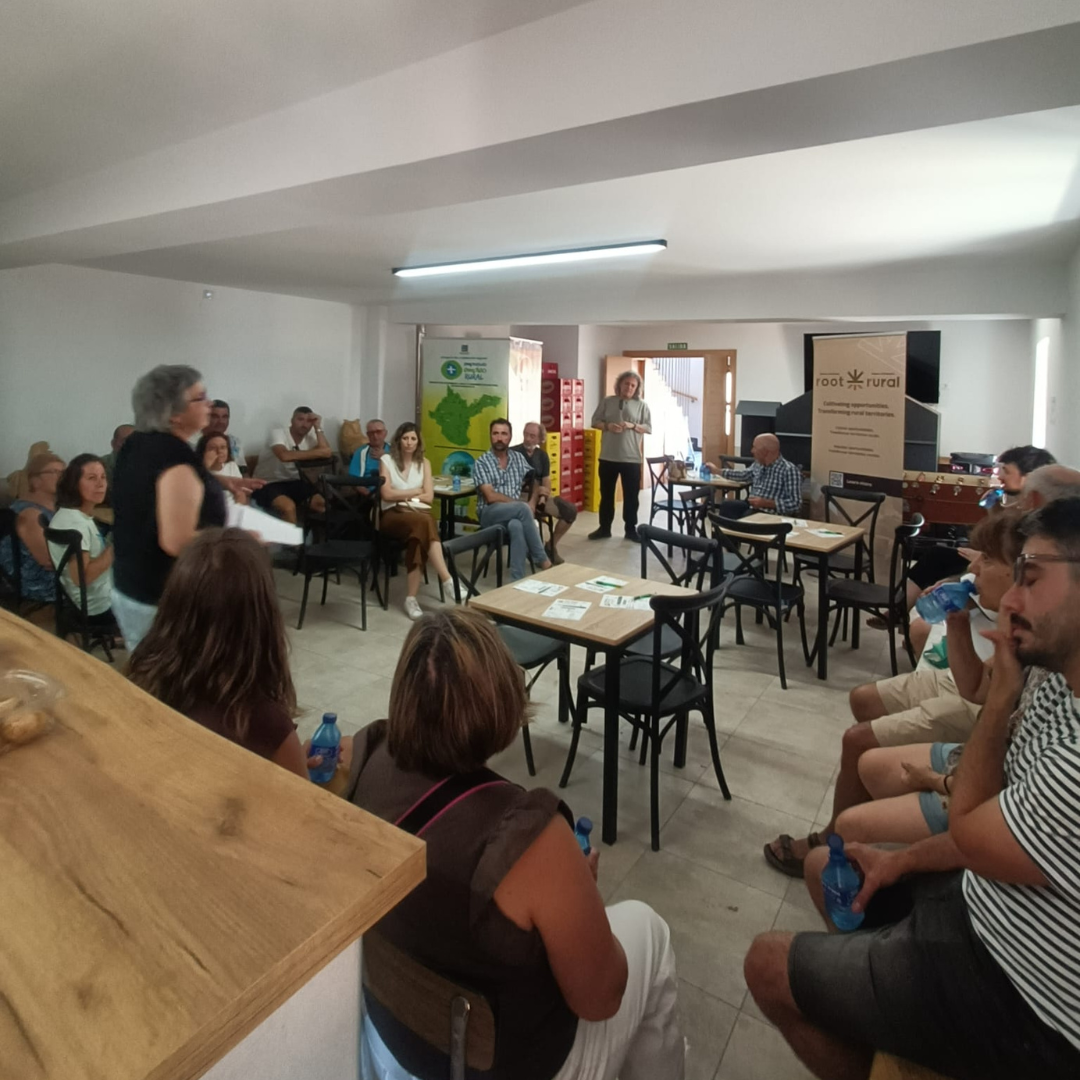
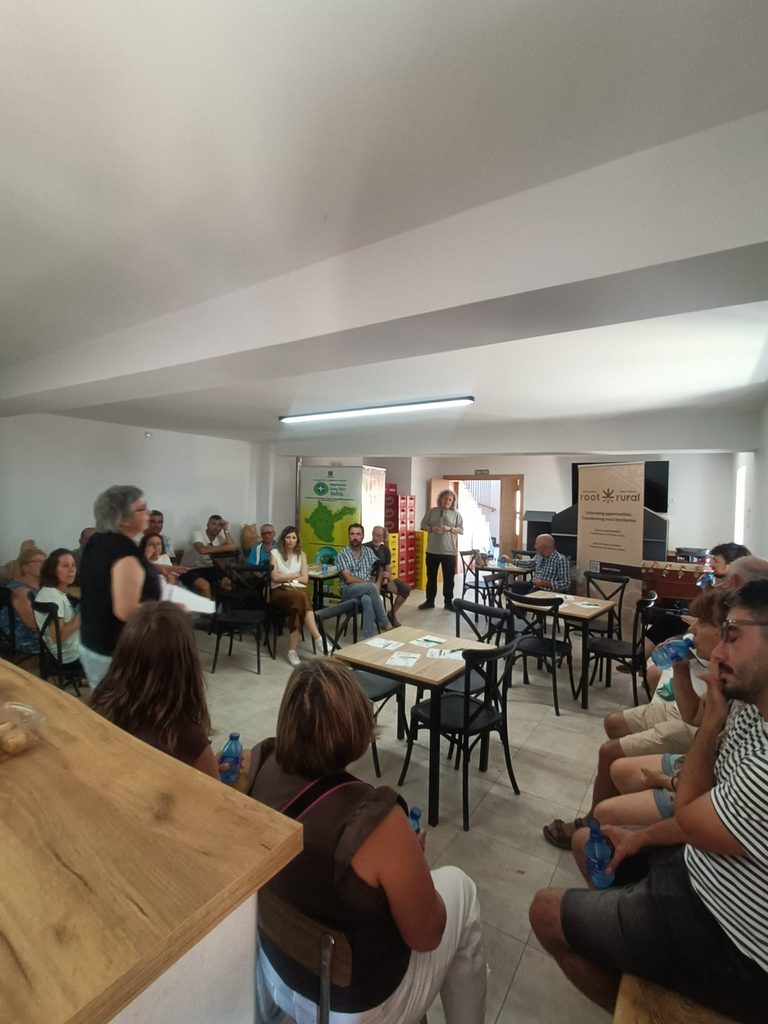
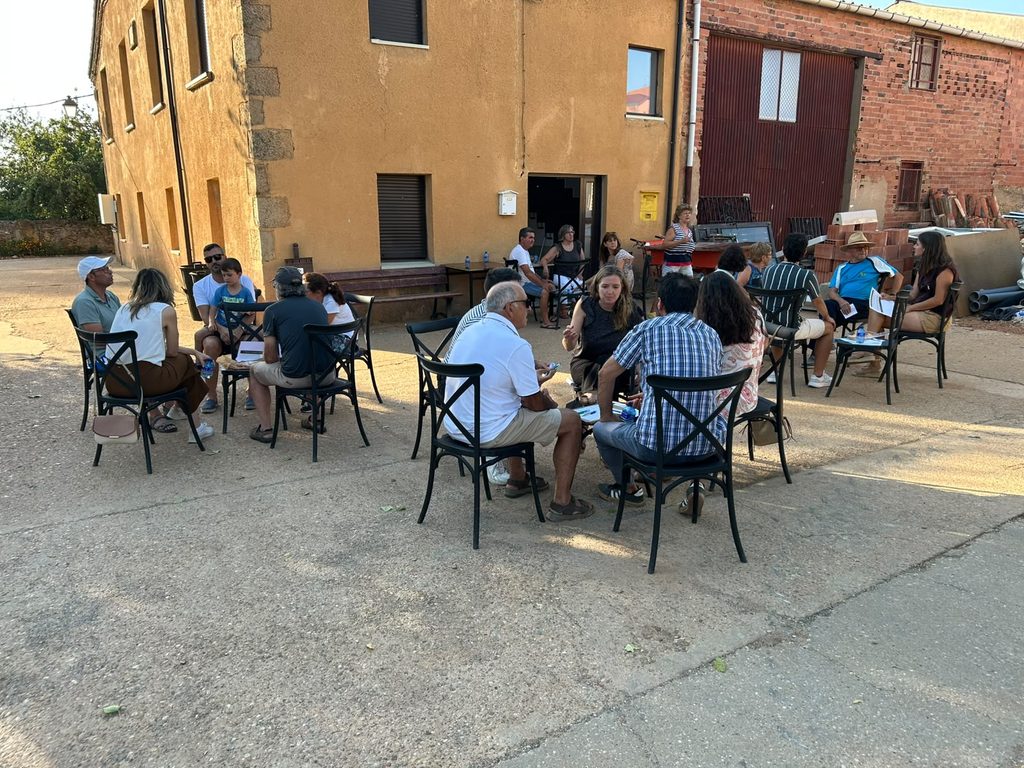
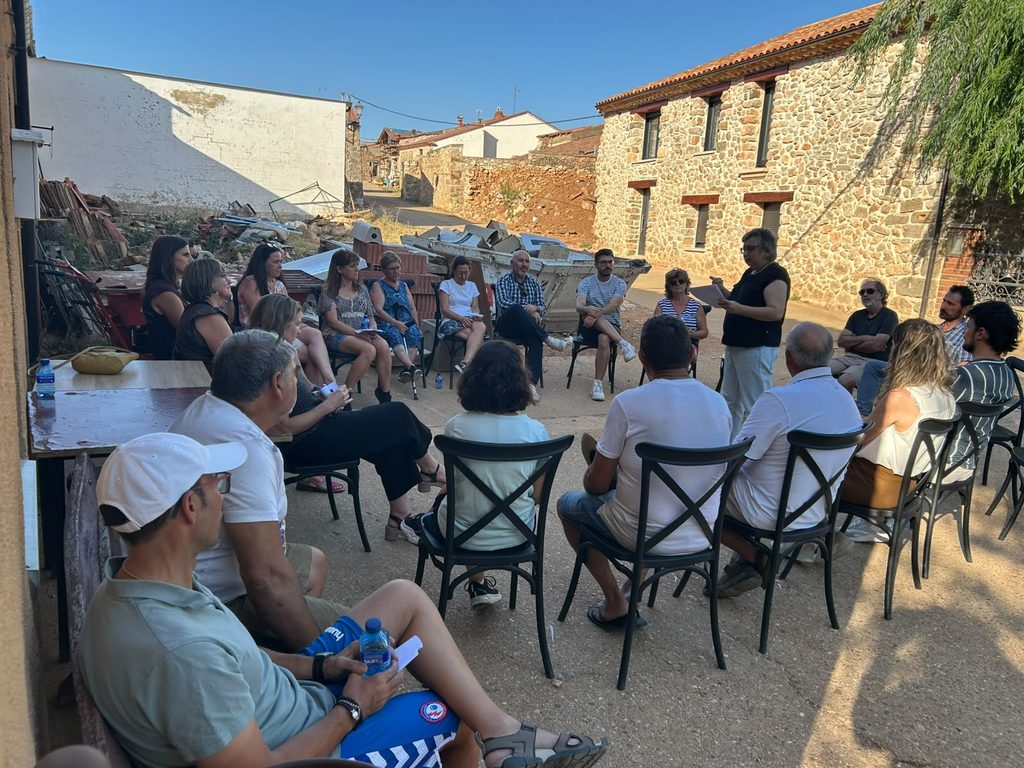
On 18 August, Camparañón, Soria (Spain), hosted the third co-creation laboratory of the ROOT RURAL project, an Erasmus+ initiative coordinated by Asociación Tierras Sorianas del Cid together with Rural Move, from Portugal. The project aims to change perceptions of the opportunities offered by rural areas and to encourage the development of new ideas, projects and entrepreneurial initiatives linked to the territory.
On this occasion, the laboratory focused on one of the key factors shaping the future of our villages: housing. Creating job opportunities, attracting new projects, or making it easier for young people and families to stay in or return to rural areas becomes much more difficult when there is no available housing in which to build a life.
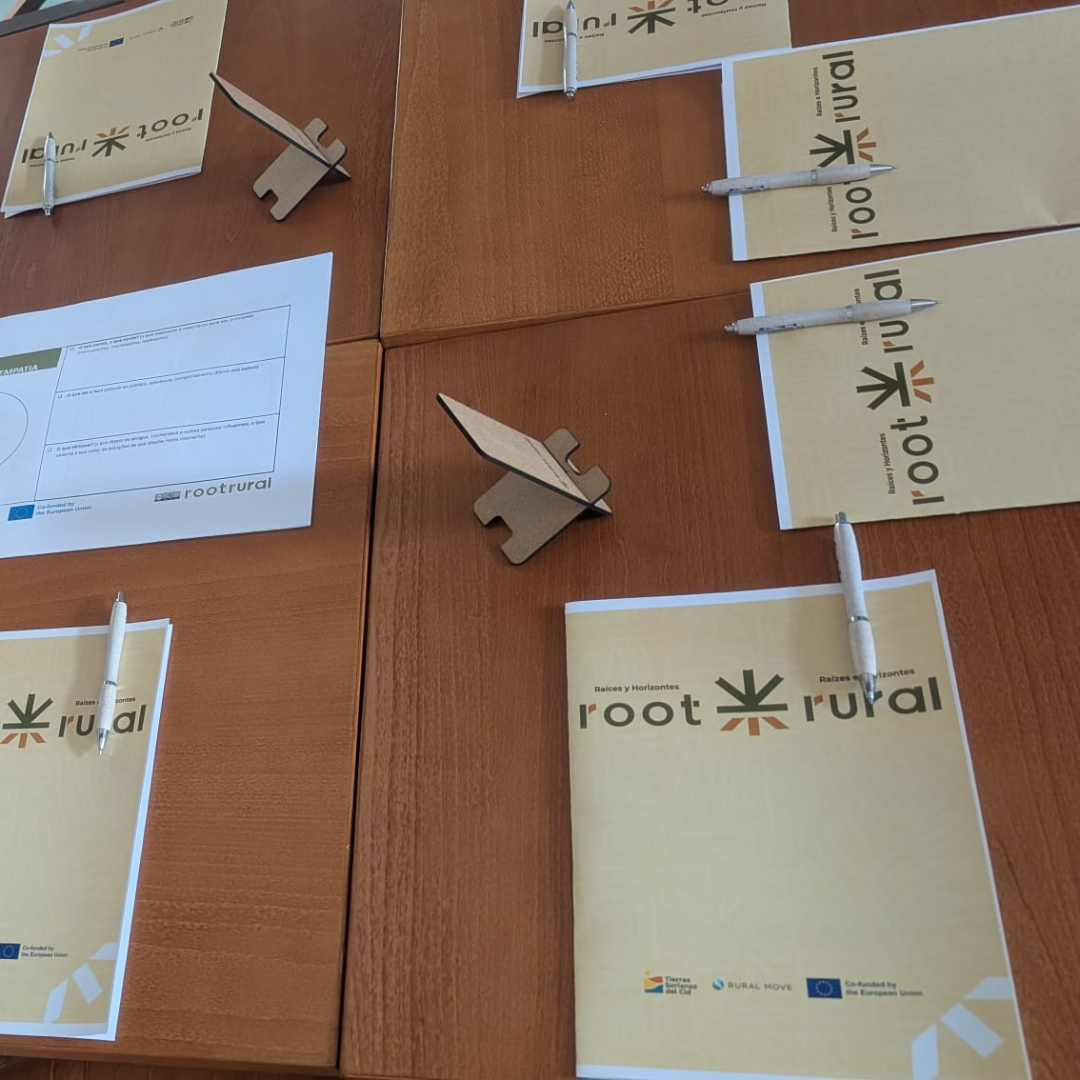
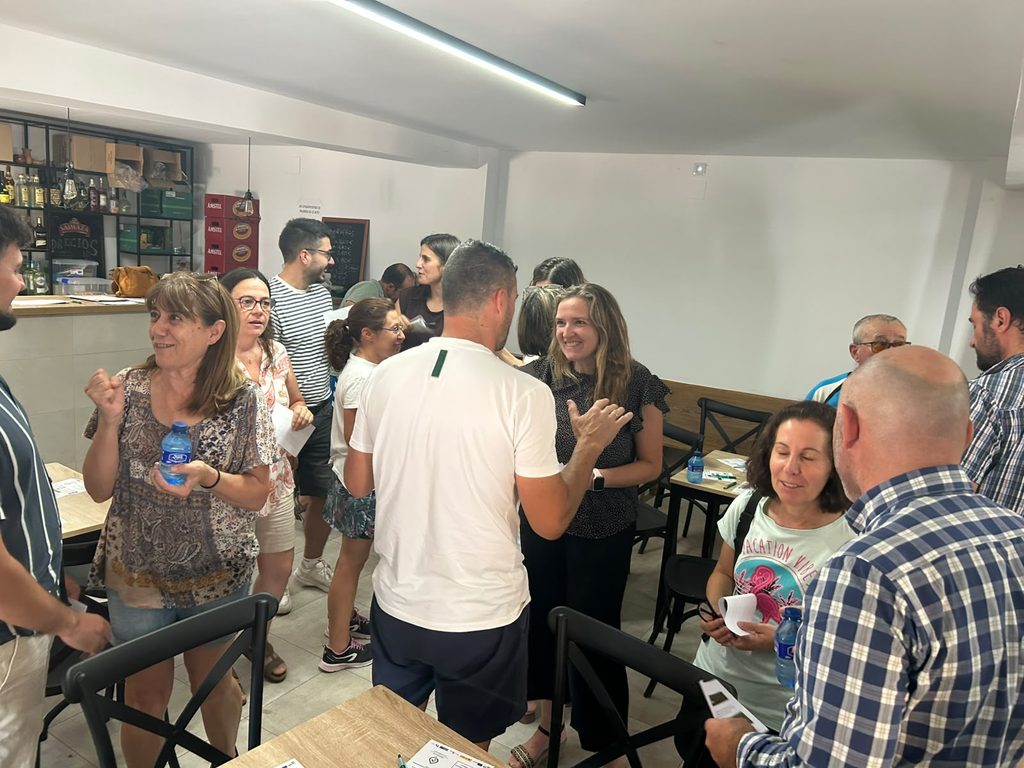
The session brought together 24 participants, who worked in four teams to analyse some of the main challenges related to rural housing and to propose possible solutions based on their own experience and knowledge of the territory.
From problems to possible solutions
As a starting point, six challenges were presented, previously identified through the work carried out in recent years on housing issues in Tierras del Cid. The participants themselves decided which challenges they considered most relevant and eventually focused the laboratory on four main issues:
- The first reflected a common reality in our villages: “We have houses, but we do not have homes”, exploring ways to turn the many closed or unused houses into real homes for people who want to stay in or move to the territory.
- The difficulty of accessing rental housing was also addressed through the question “I want to rent, but I can’t find anything”, looking at how to build greater trust between property owners and people looking for a home.
- A third team worked on deteriorated or derelict properties, considering how to help owners make a decision and take the first step, whether that means renovating, selling, transferring or taking action on the property.
- Finally, the group explored what happens when someone wants to move to a village but does not know where to start: “I want to come and live in the village, is there room for me?”
This collective intelligence process resulted in four concrete proposals: Rural Rental Institute, Secure Rental, Ruined by the Ruin, and Come, You’re One of Us.
After each team presented its proposal, participants voted to identify the ideas they considered most relevant, feasible and transformative. “Secure Rental” received the highest number of votes, with 8, closely followed by “Ruined by the Ruin”, with 7.
The selected proposal addresses a recurring problem in the rural housing market: there are people looking for rental accommodation, while at the same time there are homes that could be rented out but remain closed and unavailable.
Among the reasons identified were fear of non-payment, possible damage to the property, legal uncertainty and lack of knowledge about existing mechanisms. In response, participants proposed exploring ways to provide greater guarantees for property owners through specific insurance schemes, mediation, support services and possible forms of institutional backing.
One of the main conclusions of the laboratory was that the rural housing problem cannot be reduced simply to a lack of properties.
In many villages, houses do exist, but they remain outside the market for very different reasons: inherited properties, lack of information, mistrust, difficulty making decisions, absence of mediation, or buildings that continue to deteriorate while no action is taken.
The four proposals developed during the session addressed different aspects of the same underlying problem: reducing the risk perceived by property owners, creating trusted intermediaries, bringing derelict properties back into use, and identifying and mobilising housing for people interested in settling in the territory.
The laboratory therefore made it possible to move from diagnosis to the generation of concrete ideas, demonstrating the value of citizen participation and collective intelligence when addressing complex challenges that have no single solution and may vary depending on each village and the people who live there.
In this way, ROOT RURAL continues to make progress towards its goal of generating new responses to the challenges facing rural areas, drawing on the knowledge and experience of the people who live, work or want to develop projects there, and turning ideas generated in the laboratories into proposals that can continue to evolve and be tested.
Roots and Horizons: Cultivating a Culture of Opportunities in the Territory
Funded by: European Union through the Erasmus+ (2025-1-ES01-KA210-ADU-000353379),in collaboration with the Spanish National Agency SEPIE.
The “ROOT RURAL” project is co-funded by the European Union. The views and opinions expressed in this publication are those of the authors, Asociación Tierras Sorianas del Cid and Rural Move, and do not necessarily reflect those of the European Union or the Spanish Service for the Internationalization of Education (SEPIE). Neither the European Union nor the SEPIE National Agency can be held responsible for them.