

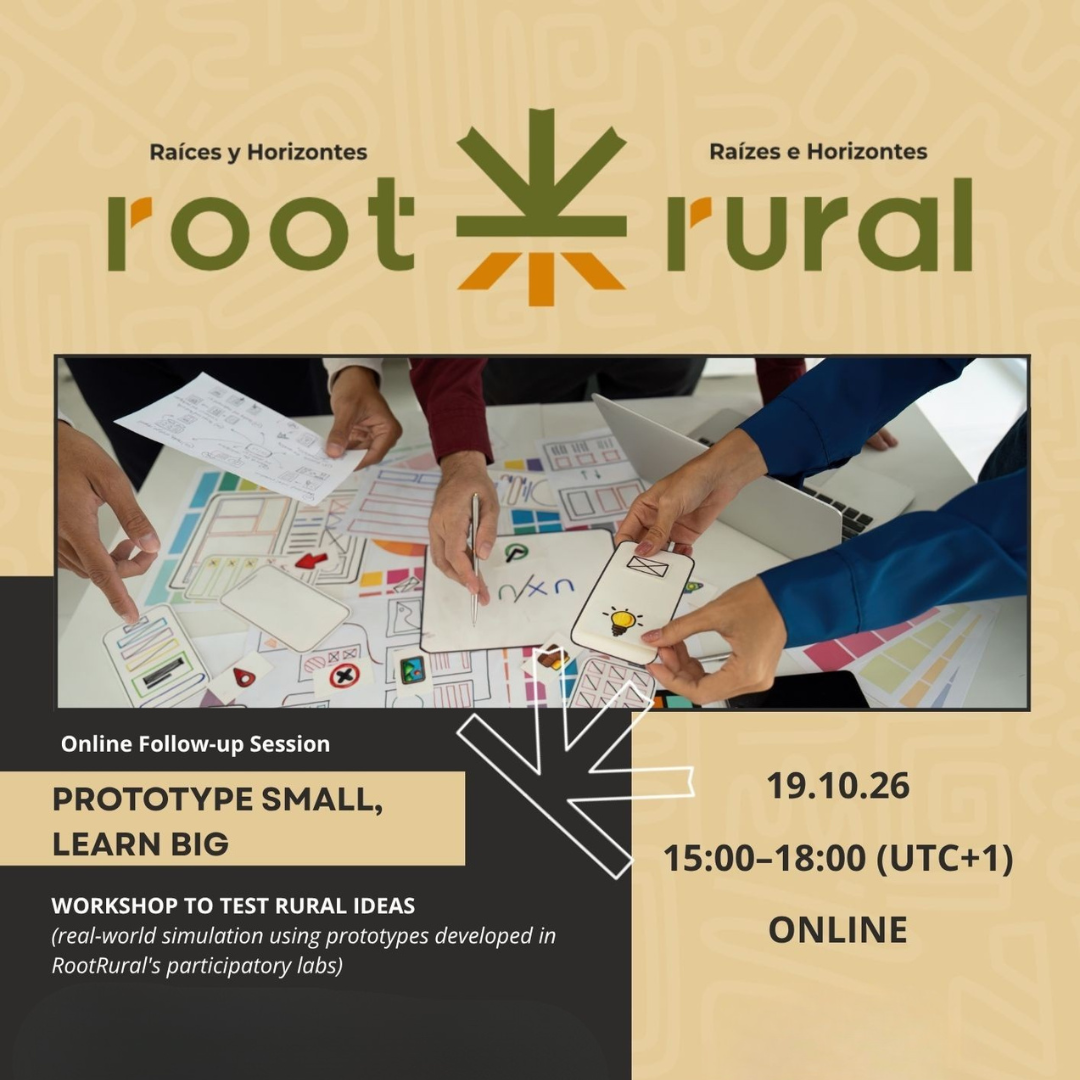
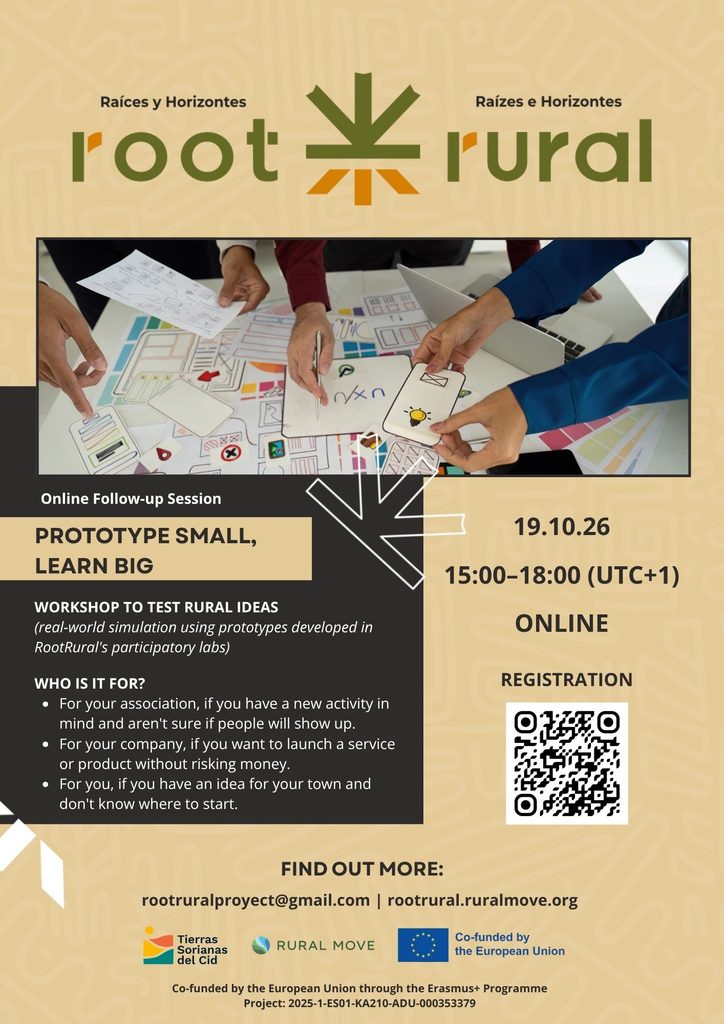
The session will take place on Monday 19 October, helping participants turn ideas into small experiments to assess their feasibility. Participation is free and open to individuals and organisations from any country.
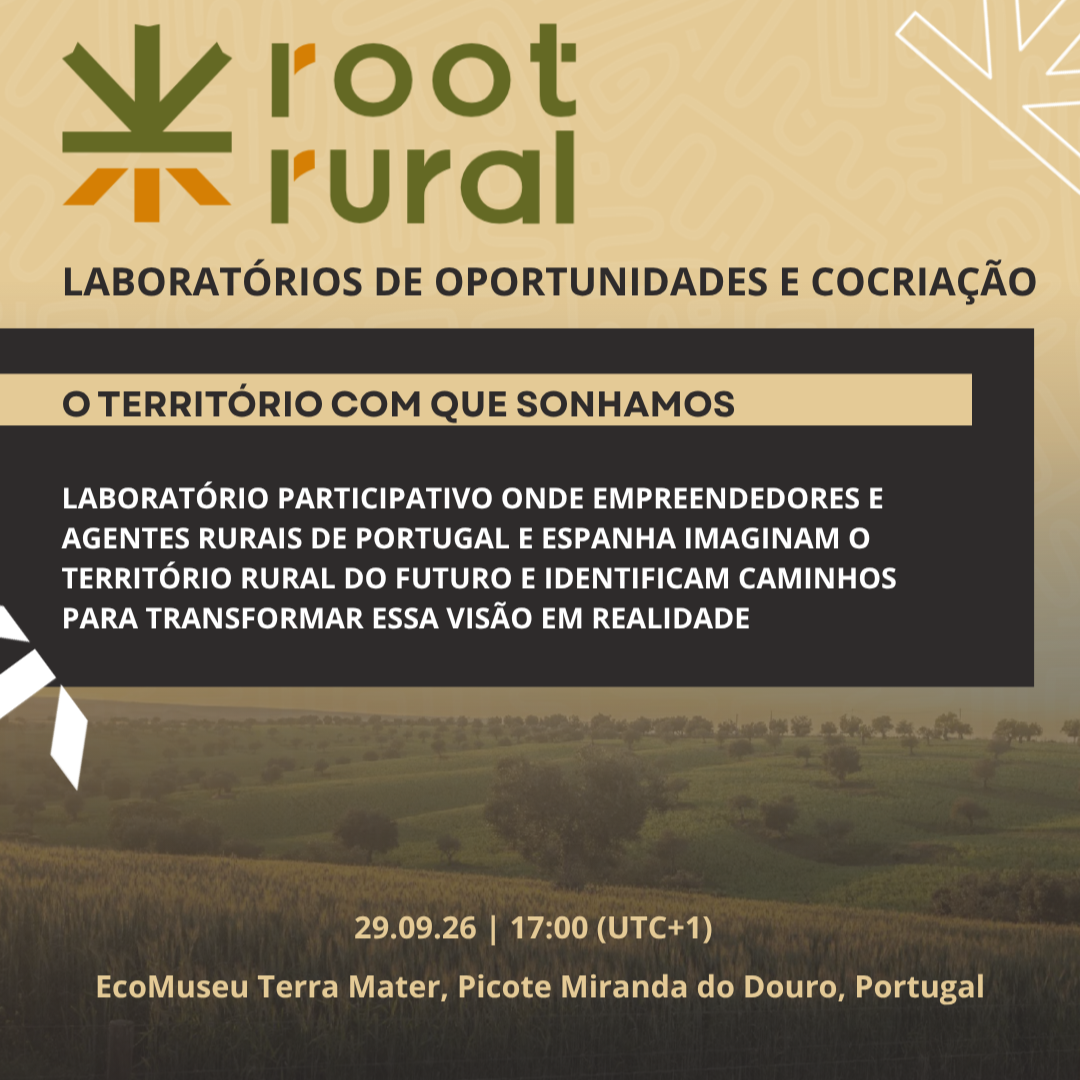
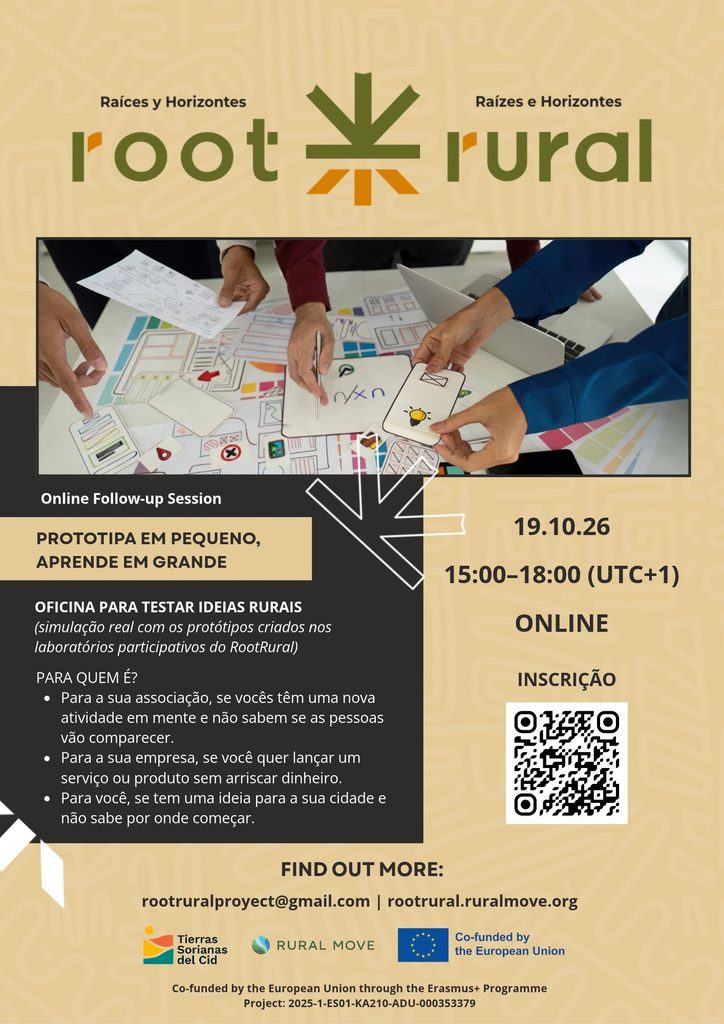
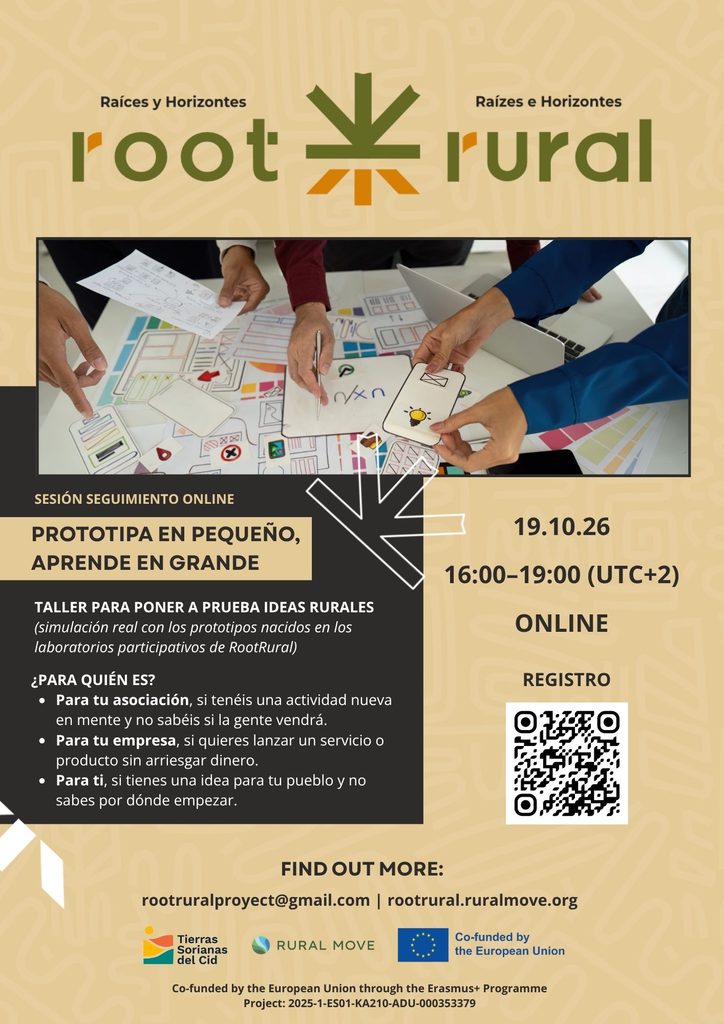
How can we find out whether an idea could work in our villages? The Erasmus+ project ROOTRURAL (Roots and Horizons) is organising an online prototyping workshop on Monday 19 October 2026, from 16:00 to 19:00 in Spain and from 15:00 to 18:00 in Portugal.
The workshop is aimed at associations, businesses and anyone with an idea for their local area. The goal is to learn how to test proposals on a small scale, gather feedback and identify any adjustments needed before investing more time and money.
With professional guidance, participants will learn a simple method for designing small experiments that can be carried out at no cost, within a few weeks and with a small team. Prototyping makes it possible to turn an idea into a practical test and learn from putting it into action.
During the workshop, participants will work in teams on a practical simulation based on the proposals selected in ROOTRURAL’s participatory labs in Spain and Portugal. These proposals address challenges such as off-season tourism, access to housing, rural healthcare, welcoming remote workers, internships for young people and reviving traditional trades.
The session will build on the work of the labs, moving from identifying needs and proposals to designing tests that help assess their feasibility. Each participant will leave with an experiment worksheet ready to use in their own organisation.
Participation is free, with advance registration required. The joining link will be sent by email before the session.
Register here: Registration form
Roots and Horizons: Cultivating a Culture of Opportunities in the Territory
Funded by: European Union through the Erasmus+ (2025-1-ES01-KA210-ADU-000353379),in collaboration with the Spanish National Agency SEPIE.
The “ROOT RURAL” project is co-funded by the European Union. The views and opinions expressed in this publication are those of the authors, Asociación Tierras Sorianas del Cid and Rural Move, and do not necessarily reflect those of the European Union or the Spanish Service for the Internationalization of Education (SEPIE). Neither the European Union nor the SEPIE National Agency can be held responsible for them.